
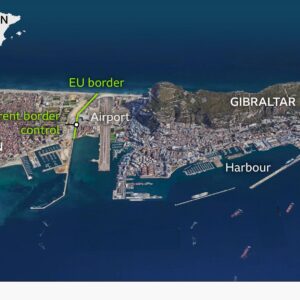
The long-awaited agreement between the UK, Spain, Gibraltar and the EU marks a significant milestone in post-Brexit relations. Following more than four years of negotiations, Gibraltar’s land border with Spain has effectively been opened, removing routine border controls and customs checks that have historically created friction for the movement of people and goods. The deal is being widely viewed as one of the most significant post-Brexit agreements reached between the UK and the EU, bringing much-needed certainty for businesses operating across the region.
A Historic Agreement
The treaty, signed in Brussels and implemented on 15 July 2026, eliminates routine border controls at the Gibraltar-Spain land frontier and removes the physical border fence that has separated the two territories since 1908. Under the new arrangement, Schengen checks will instead be carried out at Gibraltar’s airport and port, creating a more streamlined border for those travelling between Gibraltar and mainland Spain. The agreement aims to facilitate the free movement of people and goods while protecting Gibraltar’s economic future and strengthening cooperation between the UK, Spain and the EU.
Gibraltar by the Numbers
The economic importance of the agreement becomes clearer when viewed through the scale of activity that takes place across the border every day. Approximately 15,000 people cross between Spain and Gibraltar daily, making it one of the busiest border crossings in the region. These commuters account for almost half of Gibraltar’s workforce, highlighting just how interconnected the economies on both sides of the border have become. Gibraltar itself has a relatively small population of around 40,000 residents, yet it supports significant economic activity throughout southern Spain.
The broader UK-Spain trading relationship is substantial, with the UK remaining Spain’s largest export market outside the European Union and one of its most significant investment destinations. These figures underline why both sides were keen to reach a long-term agreement that reduces barriers and supports economic growth.
Why This Matters for Importers and Exporters
For logistics operators, importers and exporters, the key benefit of the agreement is improved efficiency. Reduced border formalities and the removal of routine checks at the land crossing should help minimise delays and improve the predictability of movements between Gibraltar and Spain. While the agreement is primarily focused on people movement, smoother border processes generally support stronger regional trade and allow businesses to operate with greater confidence. In an increasingly competitive international marketplace, reliability and predictability are often just as important as cost.
The agreement also removes a significant area of uncertainty that has existed since Brexit. Businesses planning investments, establishing supply chains or expanding into European markets have often been wary of unresolved border arrangements. By providing a clearer framework for future cooperation, the treaty offers reassurance to organisations that depend on efficient cross-border operations and stable trading conditions.
Another important consideration is Gibraltar’s strategic location. Situated at the point where the Atlantic Ocean meets the Mediterranean Sea, Gibraltar occupies one of the world’s most significant maritime gateways. Major shipping routes connecting Northern Europe, Southern Europe, North Africa, the Middle East and Asia pass through this corridor every day. While Gibraltar is not one of the UK’s principal freight gateways, its position at the entrance to the Mediterranean gives it enduring strategic importance within global trade networks.
What This Means For Us
For Meachers the agreement should be viewed as another positive step towards reducing friction within international trade. Although it is unlikely to have an immediate direct impact on most UK freight operations, it demonstrates a continued willingness among governments to find practical solutions that facilitate trade and improve economic cooperation. Every measure that simplifies border processes and creates greater certainty contributes to a stronger trading environment for importers and exporters.
Businesses trading with Southern Europe, Spain or Mediterranean markets may also see opportunities emerge as regional connectivity improves. Greater stability in border arrangements can encourage investment, support commercial growth and increase confidence in international supply chains. For organisations reviewing their logistics strategies, this serves as a reminder that political agreements can often translate into tangible operational benefits over time.
Here at Meachers we welcome developments that support the smoother movement of goods and reduce unnecessary barriers to trade. While the Gibraltar agreement may not transform UK-EU freight flows overnight, it represents another example of governments working together to create practical solutions that benefit businesses, workers and regional economies. The agreement provides additional certainty for companies operating internationally and reinforces the importance of efficient border management in supporting economic growth.
As global supply chains continue to evolve, businesses need logistics partners who can help them navigate changing regulations, identify new opportunities and respond quickly to developments in international trade. Improved cooperation between trading partners can only strengthen supply chain resilience and support long-term growth for importers and exporters alike.
How Meachers Can Help
As the international trading landscape continues to change, we remain committed to helping our customers understand the implications of major developments and make informed decisions that support their long-term growth. If you would like to discuss how changing European trade arrangements may affect your business, contact the Meachers Global Logistics team today.